Combined Appraisal Experience
Two appraisal platforms (Max and ClearCar) were 80% redundant. Through rigorous auditing, I identified the 20% unique value and proposed consolidation, unlocking engineering capacity for strategic initiatives.
60-Second Summary (TL;DR)
- The outcome: Discovered that Max appraisal and ClearCar (separate appraisal experiences) were 80% redundant. By auditing both platforms and identifying the 20% unique capabilities in ClearCar, I proposed a strategic consolidation to leadership that frees significant engineering capacity for larger initiatives.
- Why it mattered: Engineering capacity was trapped maintaining two nearly-identical platforms. The company was paying for duplication without strategic benefit. Consolidation would free resources and improve dealer experience by unifying the appraisal journey.
- What I did: Conducted comprehensive audits using jobs to be done, user personas, and user journeys. Interviewed users, mapped redundancies, identified the 20% unique value. Designed and prototyped the merged experience. Facilitated stakeholder alignment and presented business case to executive leadership.
- Proof: Audit quantified 80% redundancy. Executive leadership approved 2026 consolidation roadmap. I’m spearheading the execution.
The Problem
What everyone thought: Max and ClearCar are different products. They serve different use cases. Keep both.
What research revealed: Max appraisal and ClearCar were nearly identical experiences with only cosmetic differences. Maintained by separate teams with separate incentives, neither team optimized for dealers. The result: redundant features, fragmented experience, wasted engineering.
Why this mattered: Engineering capacity was fragmented across two products. New features built twice. Bugs fixed twice. Dealer confusion persisted. Company missed opportunities to reallocate resources to larger strategic initiatives.
The insight: Don’t default to “keep both.” Default to “audit ruthlessly and consolidate what’s redundant.” Preserve unique value, eliminate waste.
The 3 Decisions That Drove the Outcome
Decision 1: Conduct Comprehensive Audits
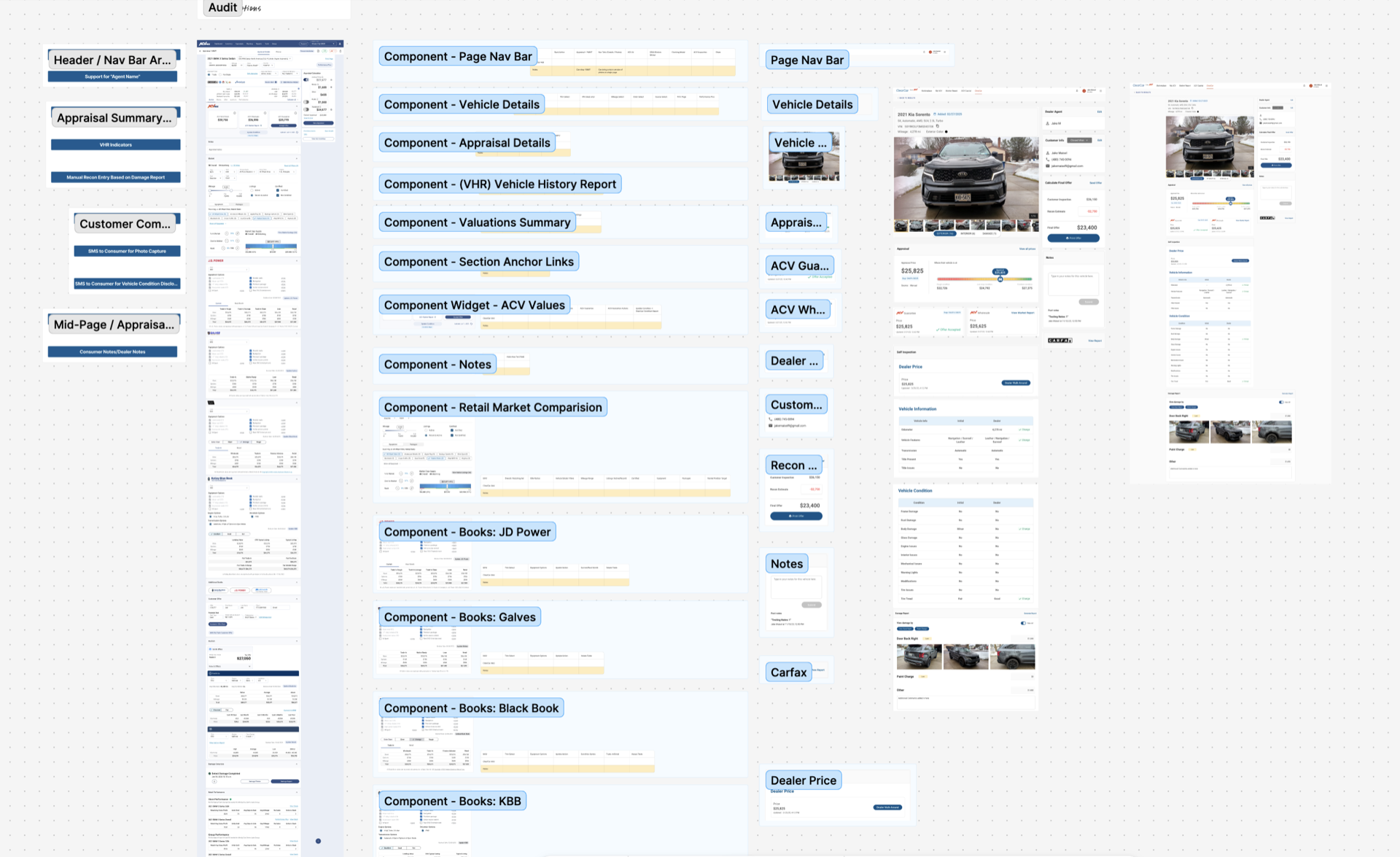
Problem: Leadership couldn’t assess consolidation value without data. “Max and ClearCar look similar” was opinion. We needed rigorous evidence of what was truly redundant vs. unique.
Solution: Systematic audits using jobs to be done (what do dealers accomplish?), user personas (who uses each?), and user journeys (how do they navigate?). Map these across both platforms. Identify overlaps. Quantify redundancy.
Impact: The audits revealed clear patterns. Both served the same jobs, same personas, nearly identical journeys. The 80/20 split emerged naturally from data, not opinion. When presented to leadership, the evidence was overwhelming—nobody could argue with it. Consolidation became the obvious decision.
Decision 2: Identify and Preserve the 20% Unique Capabilities
Problem: Consolidation would mean losing ClearCar. We couldn’t eliminate it entirely without losing whatever unique value it provided. We needed to identify what was worth preserving, merge it into Max, then sunset ClearCar.
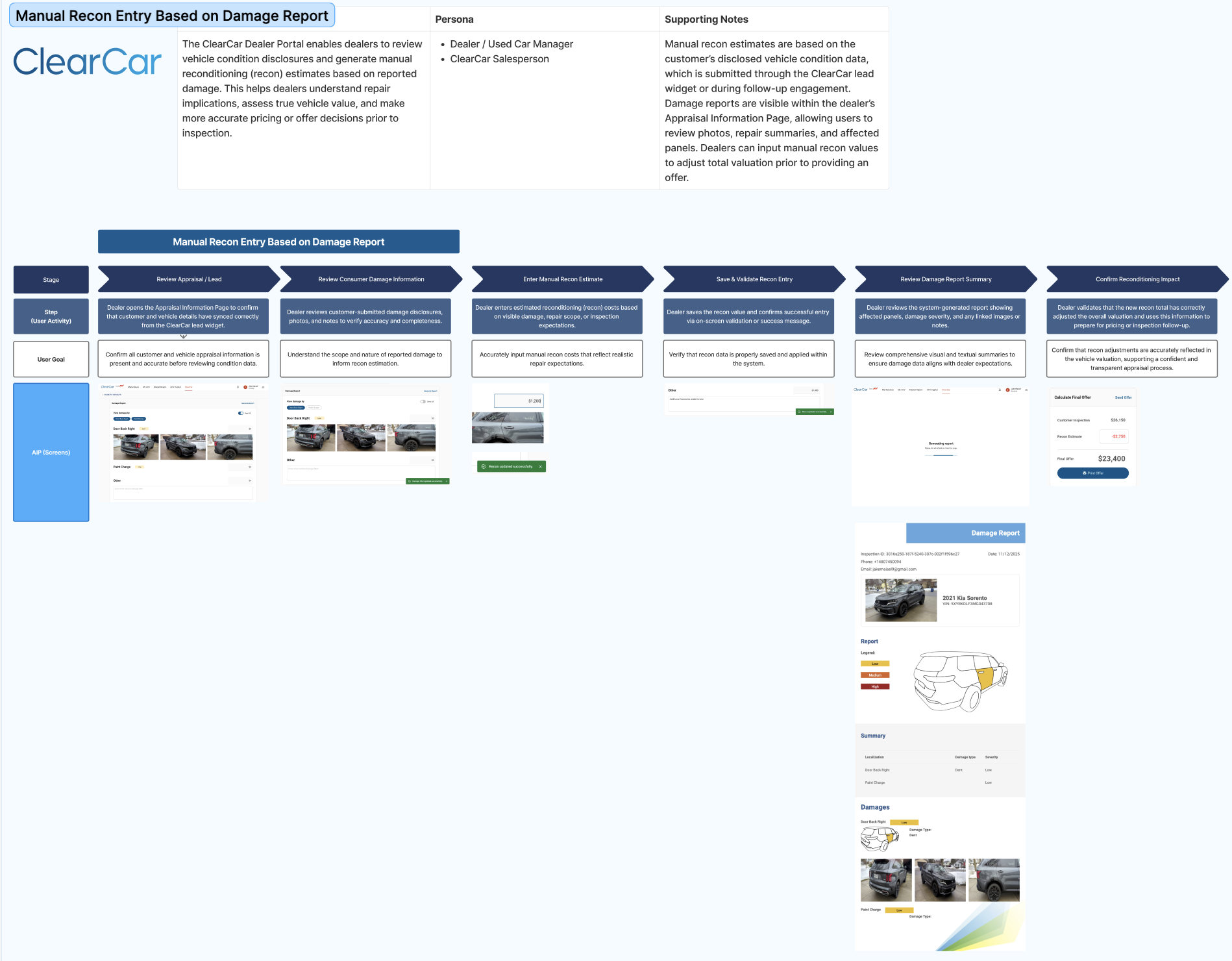
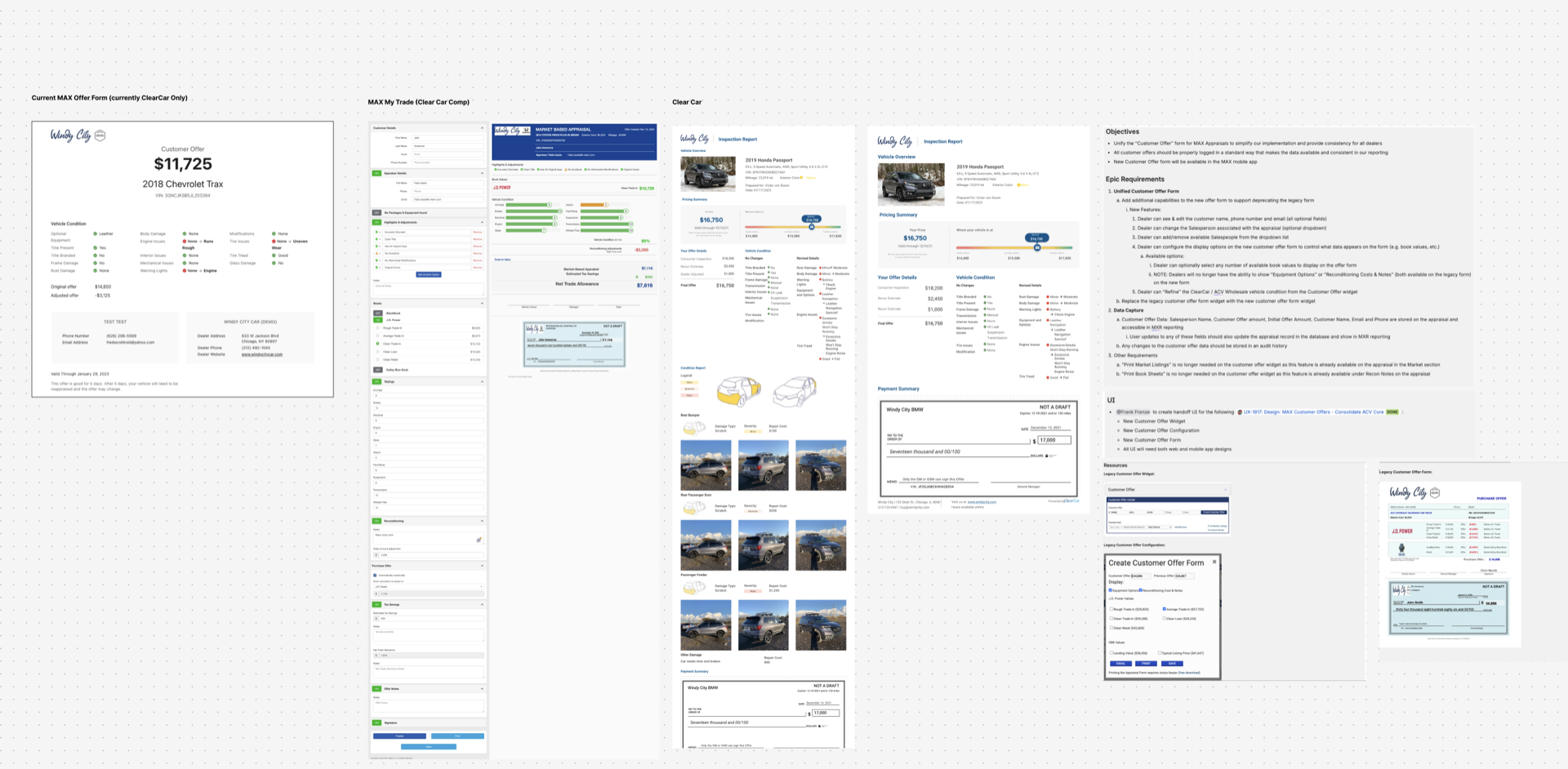
Solution: For each ClearCar feature, determine: (1) Is this present in Max? (2) If not, is it valuable and worth preserving? (3) Can we merge it without bloating the experience? Document the 20% of capabilities worth preserving. Design how they integrate into Max.
Impact: The analysis revealed most ClearCar features were rebranded Max features (redundant). But a few were genuinely unique: specific appraisal workflows dealers on ClearCar preferred, certain data views ClearCar surfaced better. By identifying these 20%, we could preserve value while consolidating. When prototyped as part of the merged Max experience, dealers responded positively—they saw consolidation as an improvement, not a loss.
Decision 3: Design and Prototype the Merged Experience
Problem: Telling leadership “we should consolidate” is abstract. Showing them “here’s what the merged experience looks like, with the best of both” is concrete and compelling.
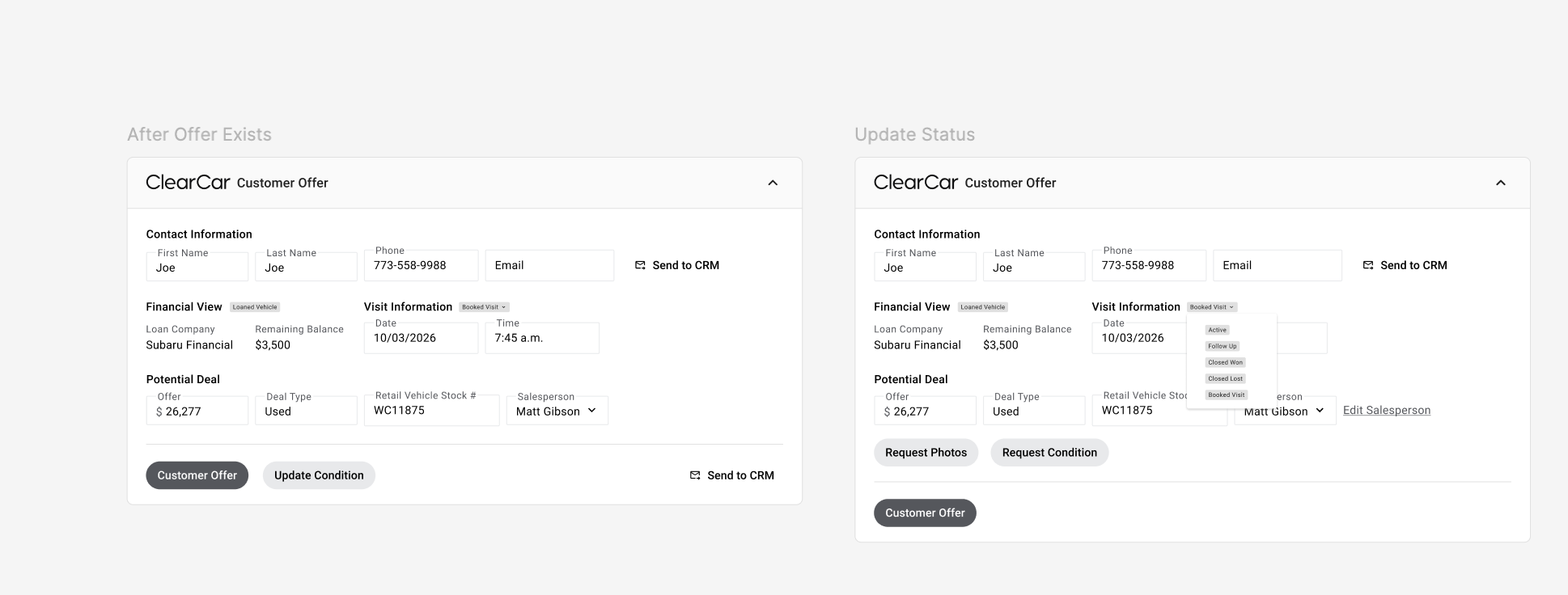
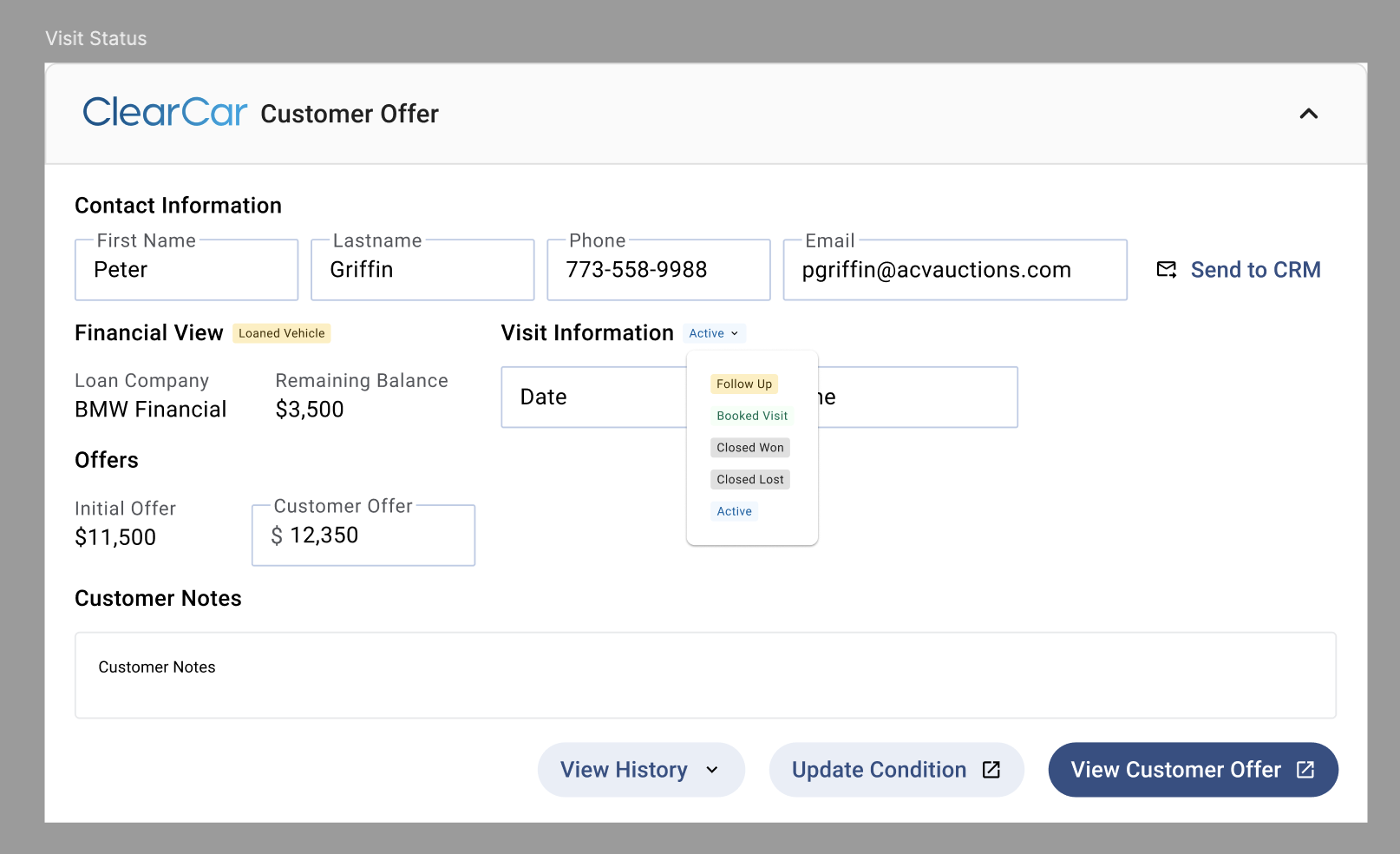
Solution: Design the merged appraisal experience with Max as the base, integrating the 20% of ClearCar’s unique capabilities. Build an interactive prototype demonstrating key workflows. Use this to show leadership what dealers would experience post-consolidation.
Impact: The prototype answered leadership’s implicit question: “Will consolidation break the experience?” By showing a thoughtfully merged experience that preserved unique value and simplified the overall product, we demonstrated consolidation was not a cost-cutting exercise—it was a strategic improvement. Leadership feedback was uniformly positive. Consolidation was approved for 2026 execution. The prototype became the design spec for engineering.
Evidence and Results
Quantitative:
- Feature overlap analysis: 80% of ClearCar features present (in some form) in Max; only 20% unique
- User journey alignment: 90%+ of dealer workflows identical across Max and ClearCar
- Engineering capacity saved: Consolidation estimated to free 3–4 FTE currently split between maintaining two platforms
- Cost of duplication: Estimated 15–20% of appraisal engineering budget spent maintaining redundancy
Qualitative:
- Dealer feedback: “Why do I have to learn two different interfaces for the same thing?” (revealed confusion caused by redundancy)
- Executive feedback: Consolidation roadmap approved unanimously; viewed as strategic win for prioritizing larger initiatives
- Team feedback: Teams that initially resisted consolidation acknowledged audit findings were rigorous and undeniable
What This Unlocked
- Immediate: 2026 consolidation execution roadmap approved and staffed
- Audit methodology: Jobs to be done + user personas + user journeys approach now being applied to other product consolidation opportunities
- Strategic capacity: Freed engineering capacity being reallocated to larger initiatives (vehicle intelligence, inventory management, pricing optimization)
- Cross-platform leadership: Positioned me as cross-platform strategist; now own or support 8+ product lines across company
Reflection
Key insight: Sometimes the most strategic product decision is removing products, not building new ones. This requires different thinking than typical product work. Consolidation is harder, less glamorous, but often higher-impact.
How it changed my approach: I now look for redundancy across the portfolio. I flag consolidation opportunities and ask “Is this product truly unique, or are we solving a problem we’ve already solved?” This shifts from “what should we build?” to “what should we rationalize?”
Problems I now look for: Product portfolios with redundancy. Teams maintaining similar products independently. Engineering capacity fragmented across near-duplicate efforts. These are high-leverage consolidation opportunities that free resources for strategic initiatives.
Appendix
Supporting artifacts:
- Jobs to be done analysis: Dealer appraisal workflows for Max and ClearCar
- User persona mapping: Comparing user types, goals, pain points across platforms
- User journey documentation: Step-by-step workflows showing redundancy
- Feature overlap analysis: Detailed mapping of which features exist in each platform
- Merged experience prototype: Interactive prototype showing ClearCar’s 20% unique capabilities integrated into Max
- Business case presentation: Quantifying engineering capacity saved, strategic benefits, 2026 roadmap
Related work:
- 2026 consolidation execution: Spearheading the merger of Max and ClearCar
- Portfolio rationalization methodology: Jobs to be done + personas + journeys approach being applied to other consolidation opportunities
- Cross-platform ownership: Expanded responsibilities across 8+ product lines