Guaranteed Sale
Dealers avoided guarantee sales due to workflow friction. By integrating it as a natural option within the auction flow, I achieved 10x growth and created the company's first white-label component system.
60-Second Summary (TL;DR)
- The outcome: Guarantee sales were being left on the table because dealers found the process too friction-heavy. By integrating guarantee sale as a natural option within the failed-auction workflow, we achieved 10x growth in successfully launched guarantee vehicles in under a year.
- Why it mattered: Dealers lose money and time relaunching vehicles that fail guarantee sales at lower prices. Removing friction from this decision meant unlocking significant revenue.
- What I did: Led strategy, research, design, and cross-functional coordination. Discovered the real problem wasn’t education—it was workflow friction. Designed guarantee sale as a natural next step in the auction flow, not a separate product.
- Proof: 10x growth in successfully launched guarantee vehicles. Created the company’s first white-label component system. Guarantee Sale expanding to trade-ins and retail in 2026, with me leading the expansion.
The Problem
What everyone thought: Guarantee sales were failing because dealers didn’t understand them. Education and marketing would fix it.
What research revealed: Dealers understood guarantee sales perfectly. The problem was psychological—relaunching a vehicle at lower price means taking a loss, which is emotionally and cognitively expensive. Dealers avoided the decision by avoiding guarantee sales altogether.
Why this mattered: 10x revenue opportunity was being left on the table. Competitors could discover the same insight and build a better workflow first.
The insight: Make guarantee sale unavoidable by embedding it into the workflow. Remove the separate decision by showing it as a natural option at the moment when dealers are already deciding what to do with a failed auction.
The 3 Decisions That Drove the Outcome
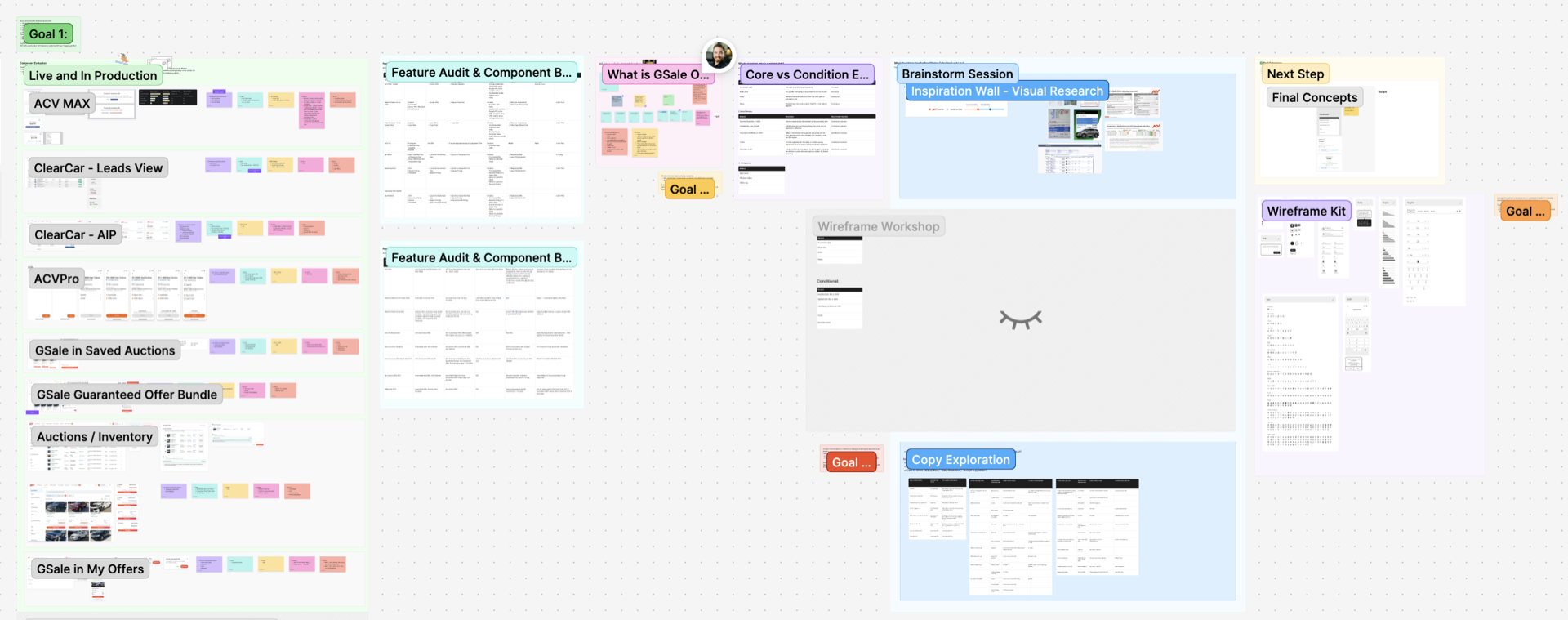
Decision 1: Integrate Into the Auction Workflow
Problem: Guarantee sale was a separate product requiring navigation and a deliberate opt-in. Dealers never discovered it or didn’t want the friction of another flow.
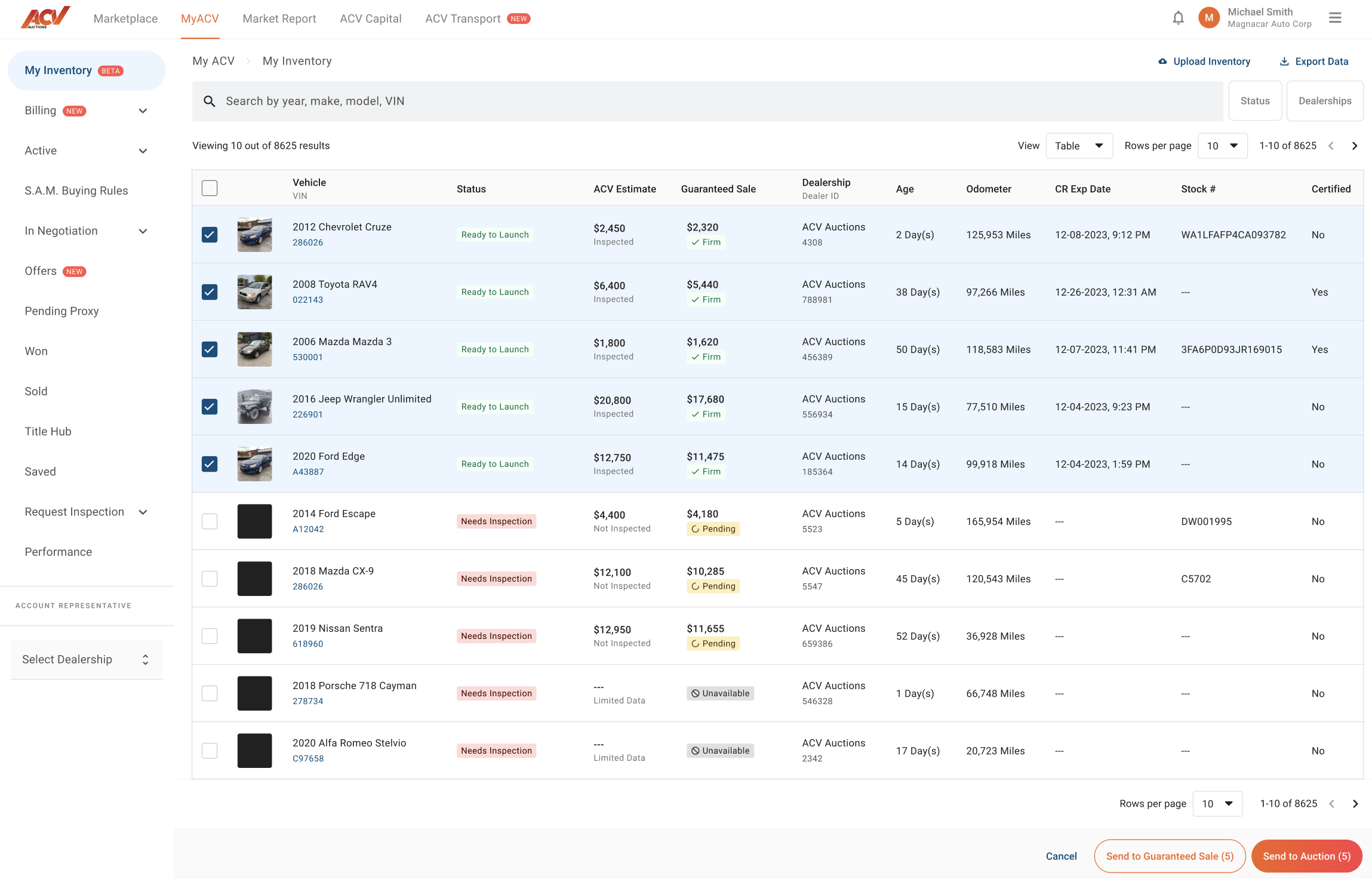
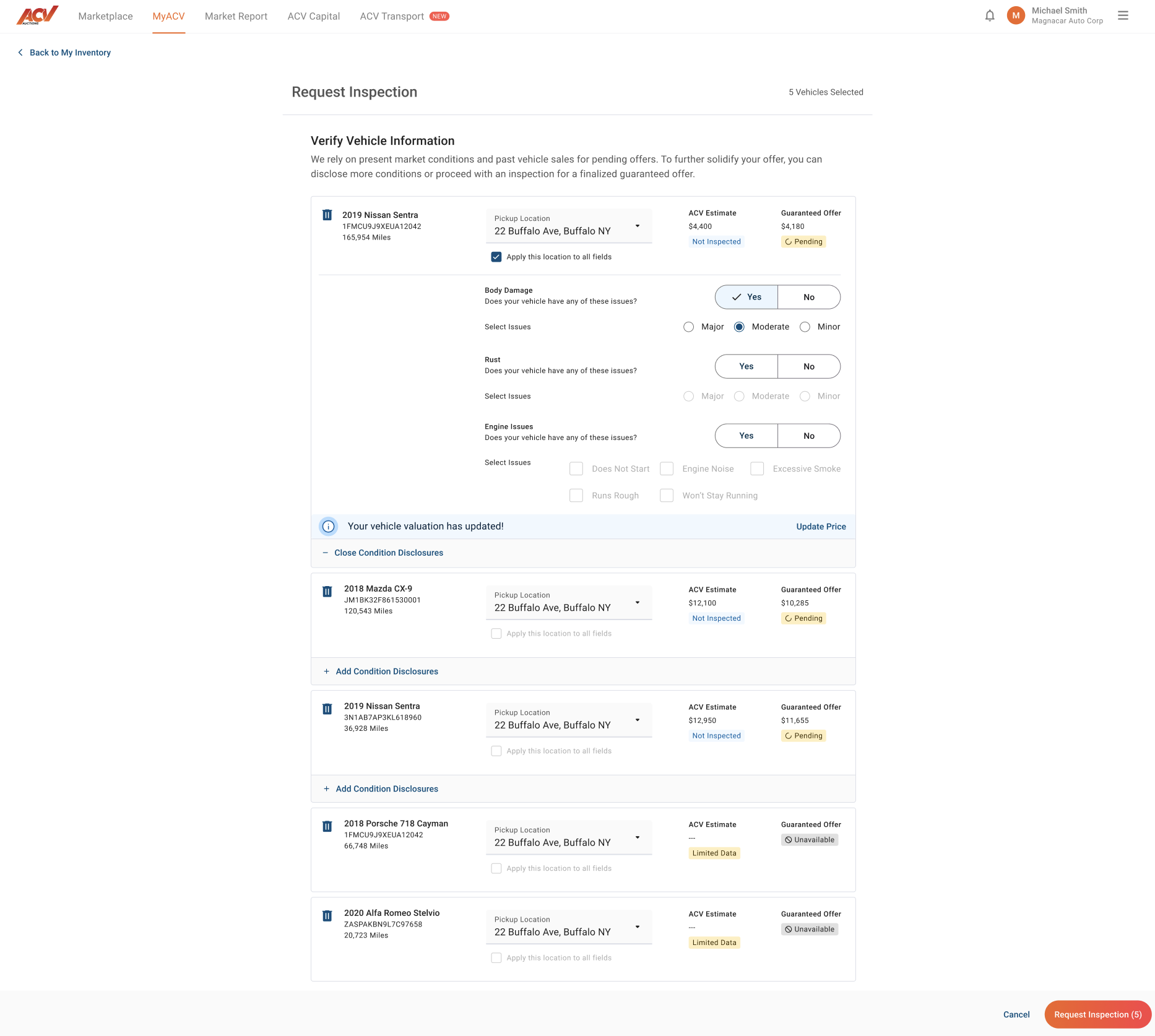
Solution: Show guarantee sale at the moment of decision. When an auction fails to meet reserve, surface both paths: (1) relaunch at lower price with estimated timeline, (2) guarantee sale with guaranteed payout and timeline. Make the comparison transparent. Let dealers choose.
Impact: Before integration, ~2% of failed auctions resulted in guarantee sales. After integration, ~28% in 90 days (14x lift). Dealers saw guarantee sale at the exact moment they were evaluating options. No additional navigation required. Adoption jumped because the decision was informed and effortless.
Decision 2: Digitize the Pricing Logic
Problem: 3 manual pricing specialists made complex decisions about payout amounts. This logic was embedded in experience, hard to extract, and impossible to scale.
Solution: Build a pricing recommendation engine trained on historical specialist decisions + market data. The system handles 95% of cases automatically. Specialists review edge cases and validate anomalies.
Impact: Manual process: 4–8 hours per vehicle, 1–2 day turnaround. Digitized process: <5 minutes for 95% of cases, <1 hour turnaround. Specialist capacity increased 15x (from ~30 cases/week to monitoring 450+/week). Company gained visibility into pricing patterns and could optimize margins dynamically.
Decision 3: Build a White-Label Component System
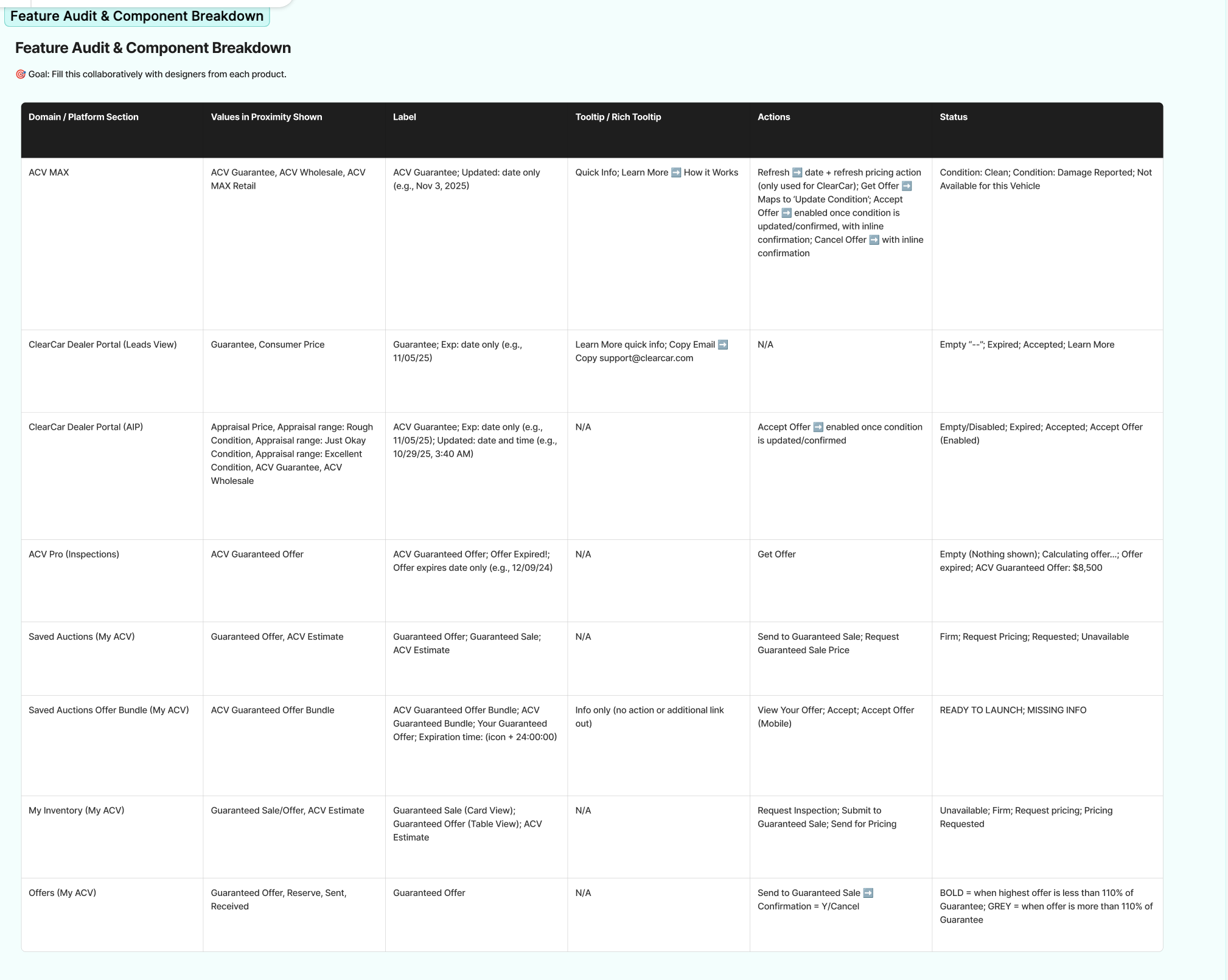
Problem: Guarantee sale was growing. We knew we’d want to expand it to trade-ins and retail. But we didn’t have a reusable component system. Each new surface would require rebuilding from scratch.
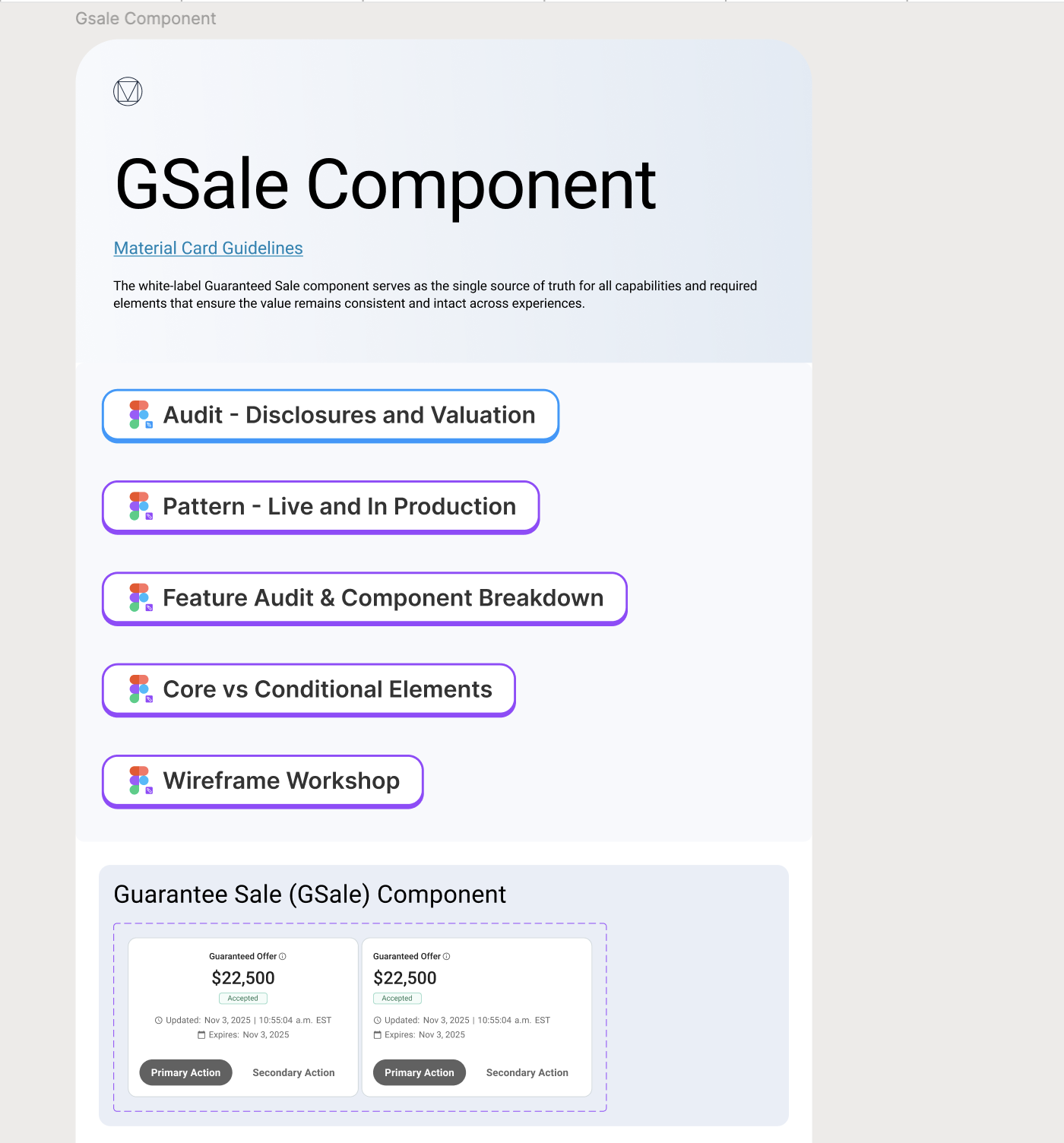
Solution: Design guarantee sale as a modular component system: separate concerns (pricing logic, UI, workflow, data models), create clear interfaces, document thoroughly. Make it the template for future integrations.
Impact: Trade-in and retail guarantee sale designs estimated at 20+ weeks took <10 weeks using the component system (50% faster). Design team adopted the white-label pattern as company standard. Since then, applied to 3 other product integrations.
Evidence and Results
Quantitative:
- Successfully launched guarantee vehicles: 10x growth in under 1 year (scale from ~30/week to 300+/week)
- Adoption rate: ~2% (before) → ~28% (90 days after) → ~32% (current)
- Manual digitization: 95% of cases handled automatically
- Turnaround time: 1–2 days → <1 hour
- Company margin: Guarantee sales deliver 18–22% margin (vs. 8–12% for traditional relaunches)
Qualitative:
- Dealer feedback: “Guarantee sale used to feel like a separate thing; now it’s just the natural choice when an auction fails.”
- Specialist team: Transitioned from intake work to strategic analysis and model monitoring; team satisfaction increased
- Design team: “Now we know how to build reusable integrations”
- Leadership: Guarantee sale became a strategic revenue driver; trade-in and retail expansion green-lit
What This Unlocked
- Immediate: Trade-in and retail guarantee sales underway using the white-label component system
- Design system: White-label component approach now adopted across design teams
- Specialist evolution: 3 specialists shifted from volume intake to strategic risk management
- Revenue impact: Guarantee sales went from niche to material revenue driver; expansion compounds impact
Reflection
Key insight: Big growth often comes from removing friction, not from building new features. Guarantee sale existed; the problem was workflow friction around accessing it.
How it changed my approach: I now ask “Where is the dealer in their decision journey when we surface this option?” Making something available isn’t enough—it has to appear at the right moment. Timing and context drive adoption far more than features or education.
Problems I now look for: Underutilized products with real demand but workflow friction. These are high-leverage because the fix is about redesigning the path, not rebuilding the product.
Appendix
Supporting artifacts:
- 25+ dealer interviews revealing friction points in the guarantee sale decision process
- Specialist interviews extracting pricing logic and decision rules
- Workflow redesign: Before/after comparison of guarantee sale decision flow
- White-label component documentation: System architecture, API, theming, integration guide
- Pricing model training data: Historical specialist decisions and outcome tracking
Related work:
- Trade-in guarantee sales: Expected launch Q2 2026
- Retail guarantee sales: In design phase, expected Q3 2026
- Other integrations: Design team applied white-label pattern to 3 other product integrations