Case study
ClearCar
An AI-powered trade-in platform: a 60-second offer for consumers, and the tools dealers use to turn that offer into a car. I was the lead designer for three years and designed nearly every part of it.
In 60 seconds
- The problem: Dealers want to buy cars straight from consumers, before those cars hit auction. But a trade-in offer is a lead form, and most people abandon lead forms. And an offer based on a guess isn’t one anyone trusts.
- What I did: I was ClearCar’s lead designer for three years and designed nearly all of it: the consumer offer flow, the condition survey, photo capture with AI damage detection, the dealer portal, and its mobile version for the lot. I worked side by side with the engineering manager and product owner, and led collaboration with an engineering team of 6 to 18, QA, marketing, and our field facilitators.
- The result: A consumer flow that more than 65% of people finish, running on dealer websites, on the lot, and in the service lane. It’s now a core part of ACV MAX.
The problem
ClearCar is a lead generation product. A dealer puts it on their website, and a consumer uses it to find out what their car is worth. Every consumer who finishes becomes a car the dealer can buy.
That creates two problems at once. People drop out of long forms, especially ones that ask for photos and personal details before showing any value. And the offer has to be real. A lowball guess breaks trust, and a number that changes at the dealership breaks it even more.
The insight: people will do a surprising amount of work if every step clearly moves them closer to their answer. The job wasn’t to make the flow as short as possible. It was to make every step feel like progress.
The consumer offer: four decisions
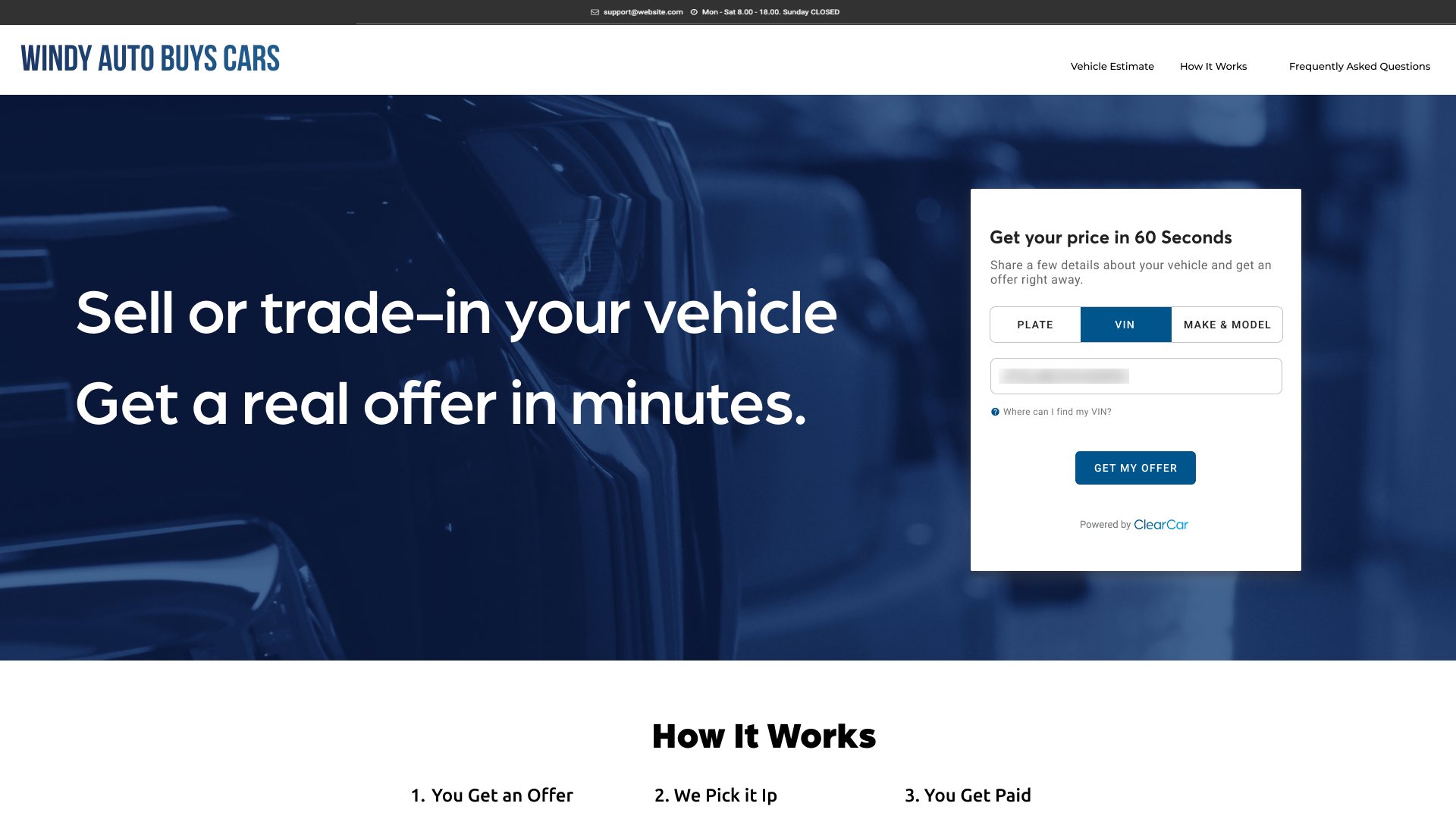
1. Make starting effortless
The widget opens with the easiest possible question: a license plate, a VIN, or year, make, and model. Everything we could look up, we filled in, and if a plate or VIN couldn’t be found, the flow offered another way in instead of a dead end.
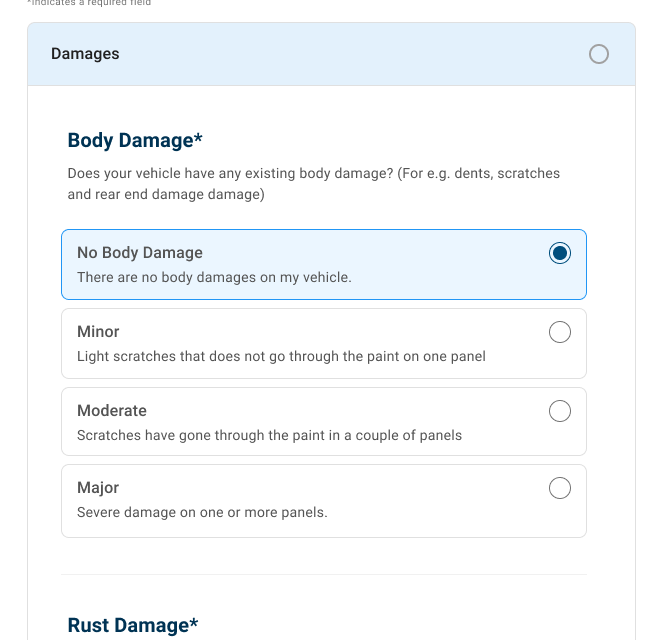
2. Ask about condition in plain language
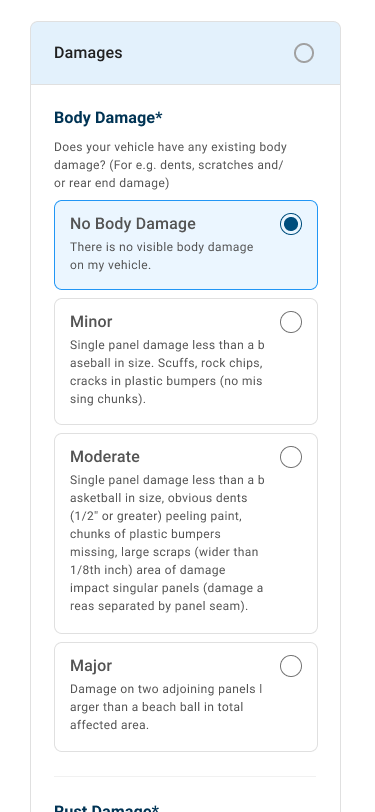
Condition is what makes a price accurate, and it’s also where people give up. I turned it into a short survey of grouped questions that open one at a time and check themselves off when they’re done. Every answer is written the way people talk, with everyday reference points like “damage smaller than a baseball” instead of industry grading terms.
3. Show the work behind the number
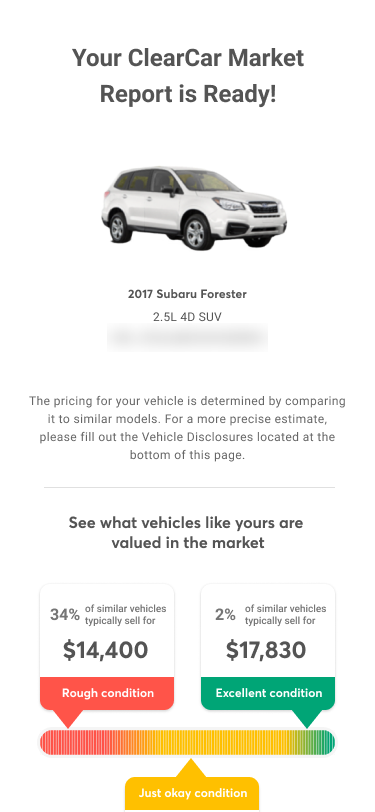
This is the moment the whole flow builds toward, so I designed it to earn trust. The price comes with the market around it: what cars like yours sell for in rough, okay, and excellent condition, and exactly where yours lands. Below that, “What’s behind your price” lists the facts it’s based on, and “What’s next” tells people what to bring to the dealership to lock it in.
Not just a number. A number you can check.
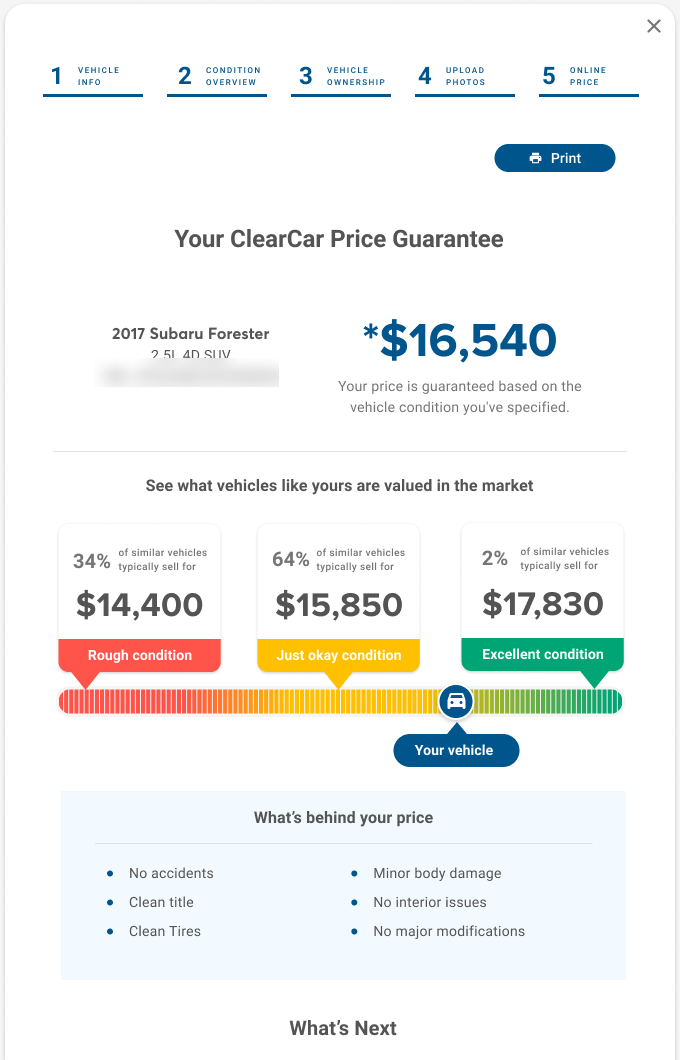
The market bar turns a single price into a position people can see and understand.
4. Let photos and AI do the heavy lifting
Photos make the offer accurate, but they’re the biggest ask in the flow. On a computer, we text people a link so they can take photos with their phone. On a phone, they can start right away. Any damage they mention in the survey comes up first in the photo steps, and ACV’s AI checks every image for dents, rust, and scratches. The condition is based on evidence, not a guess.
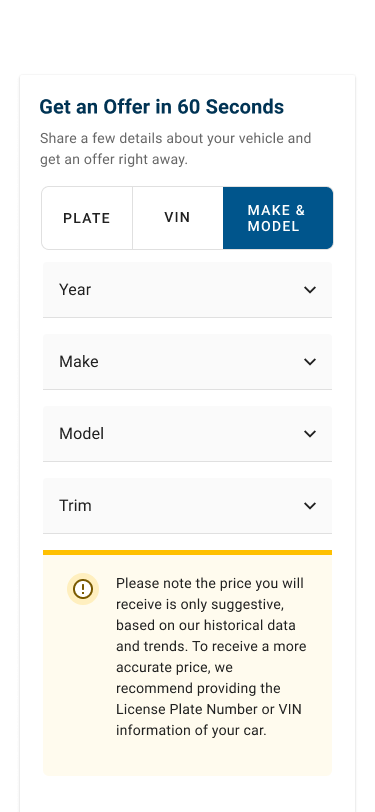
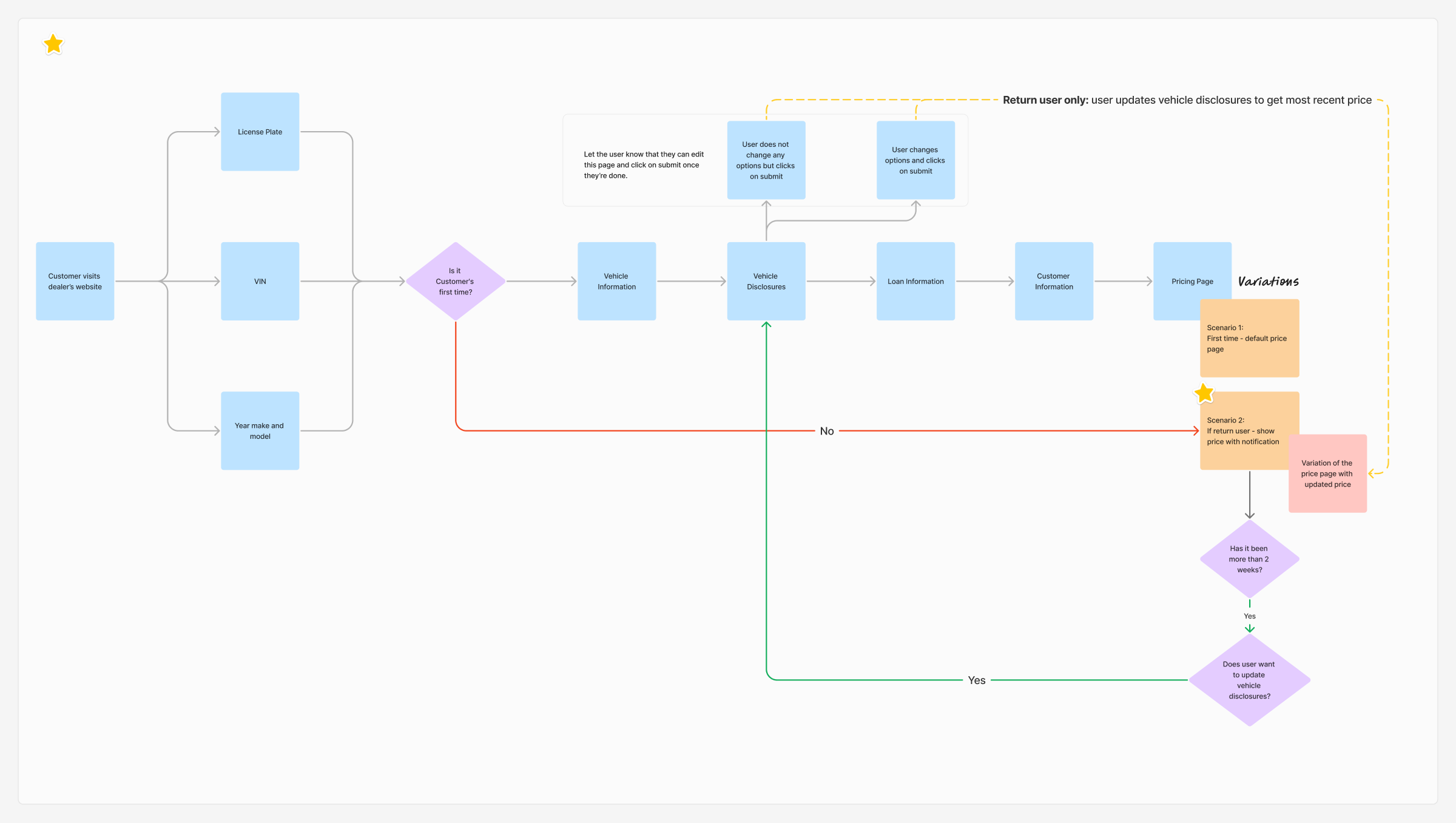
I also mapped what happens when someone comes back. Returning users can update their answers and get a fresh price, and if their price is more than two weeks old, we ask them to confirm their car’s condition again.
The dealer side
Turning an offer into a car
A finished offer is only half the job. Leads arrive from the dealer’s website, the lot, the service lane, and partners like Amazon, and for each one the dealer still has to call the customer, inspect the car, and make a final offer. I designed the ClearCar dealer portal to make that fast, and to bring ACV’s other products into the same screen.
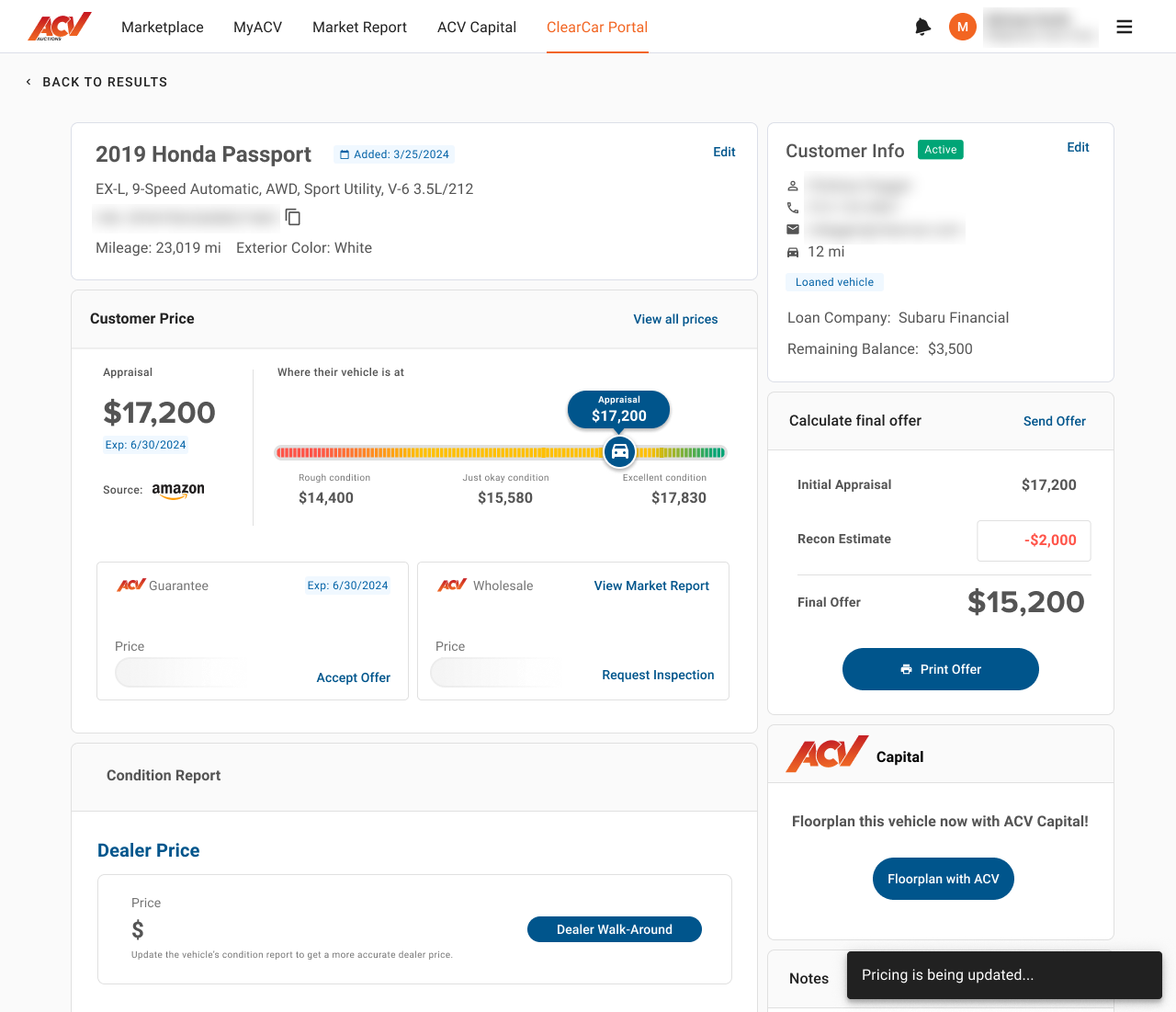
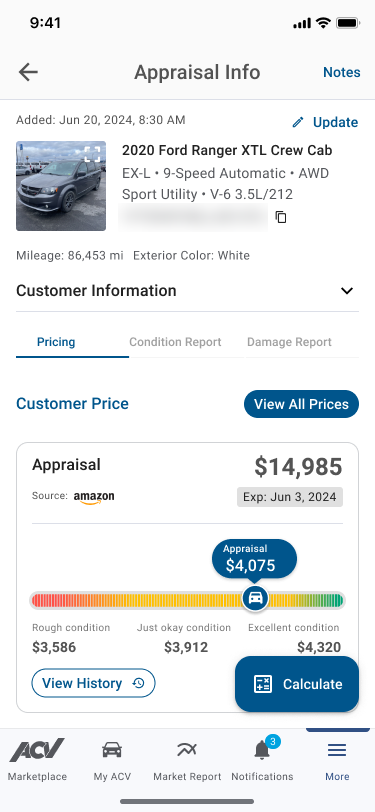
- The same market bar the customer saw. Dealers see exactly what the customer was shown, so both sides start from the same number.
- A calculator, not a spreadsheet. Start from the appraisal, subtract the reconditioning estimate, adjust, and send the final offer from the same page.
- ACV built in. One click to get an ACV guarantee on the car (the same Guaranteed Sale I designed) or to finance it through ACV Capital.
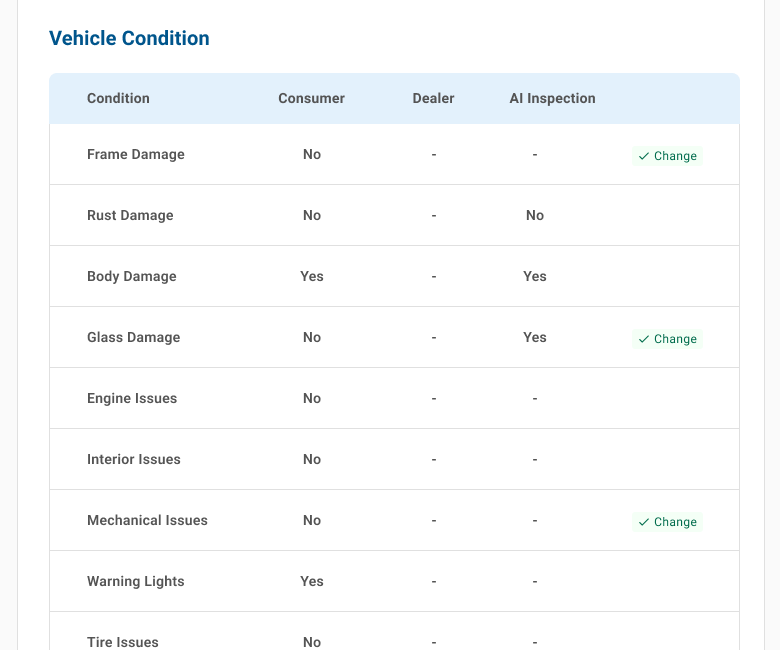
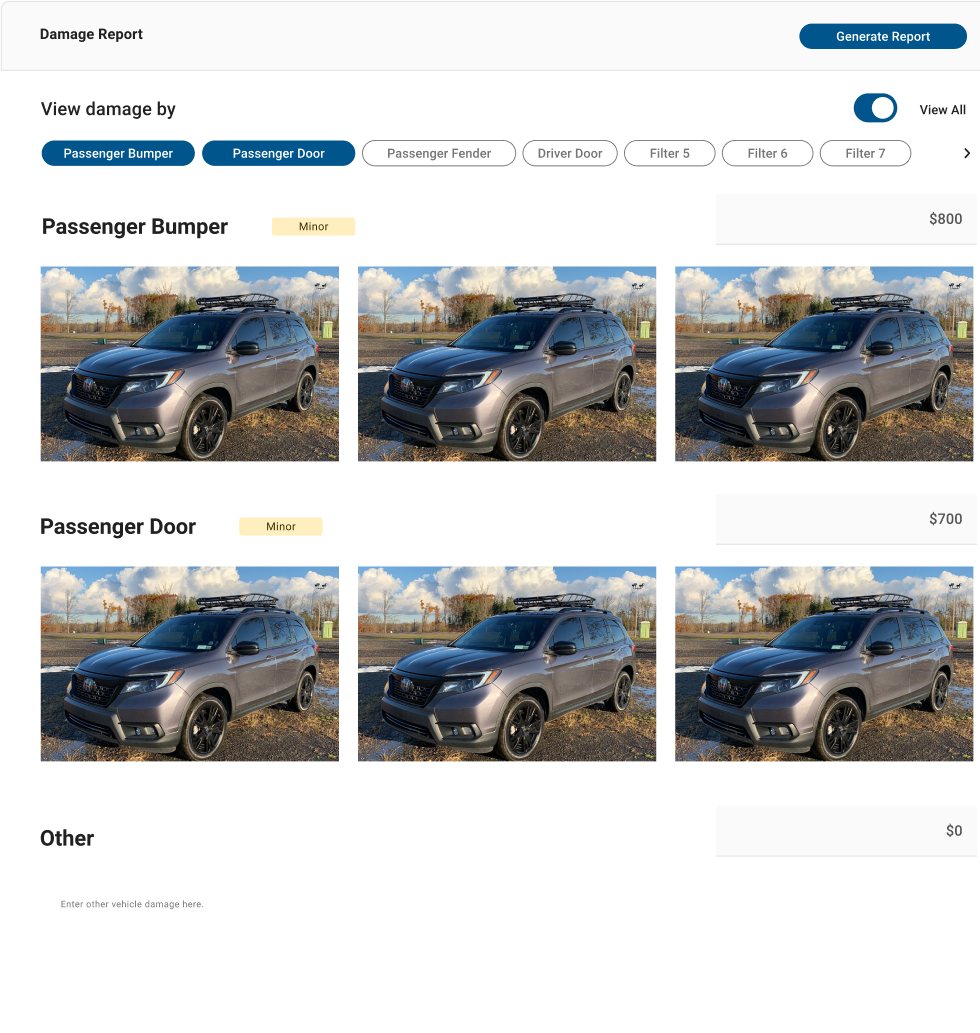
The most useful view compares three sources side by side: what the customer said, what the dealer found, and what the AI inspection detected. Differences stand out immediately, and the AI damage report shows each damaged panel with photos and a repair estimate.
Built for the lot, not just the desk
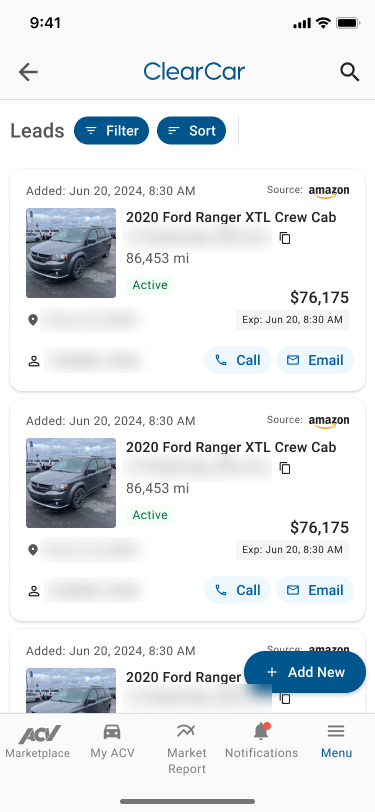
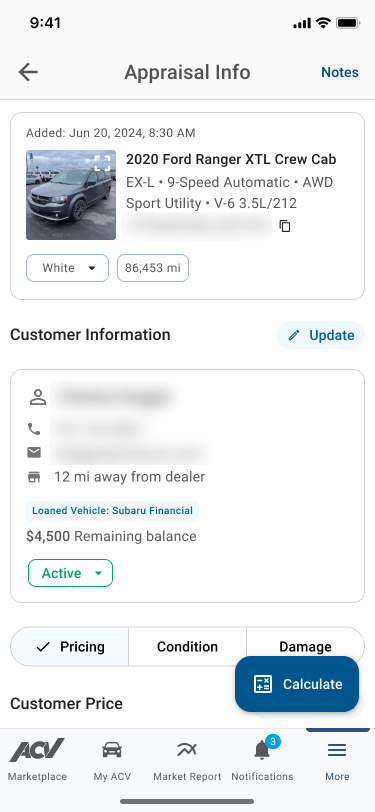
Dealers don’t appraise cars at a desk. They do it walking the lot with the customer standing next to them. So I designed a mobile version of the dealer portal: leads, appraisal details, customer info, and the offer calculator, all usable with one hand.
Scale
One product, many storefronts
As ClearCar grew, the same flow had to work for many dealers at once. I designed it to be white-labeled, so each dealer, brand store, and partner could run it under their own name. For dealer groups with many locations, I designed centralized lead routing: the customer enters a ZIP code and picks a nearby store, and the lead goes straight to that store’s portal. I designed two versions to test: matching people to the closest store automatically, and matching automatically while still letting them pick a different store.
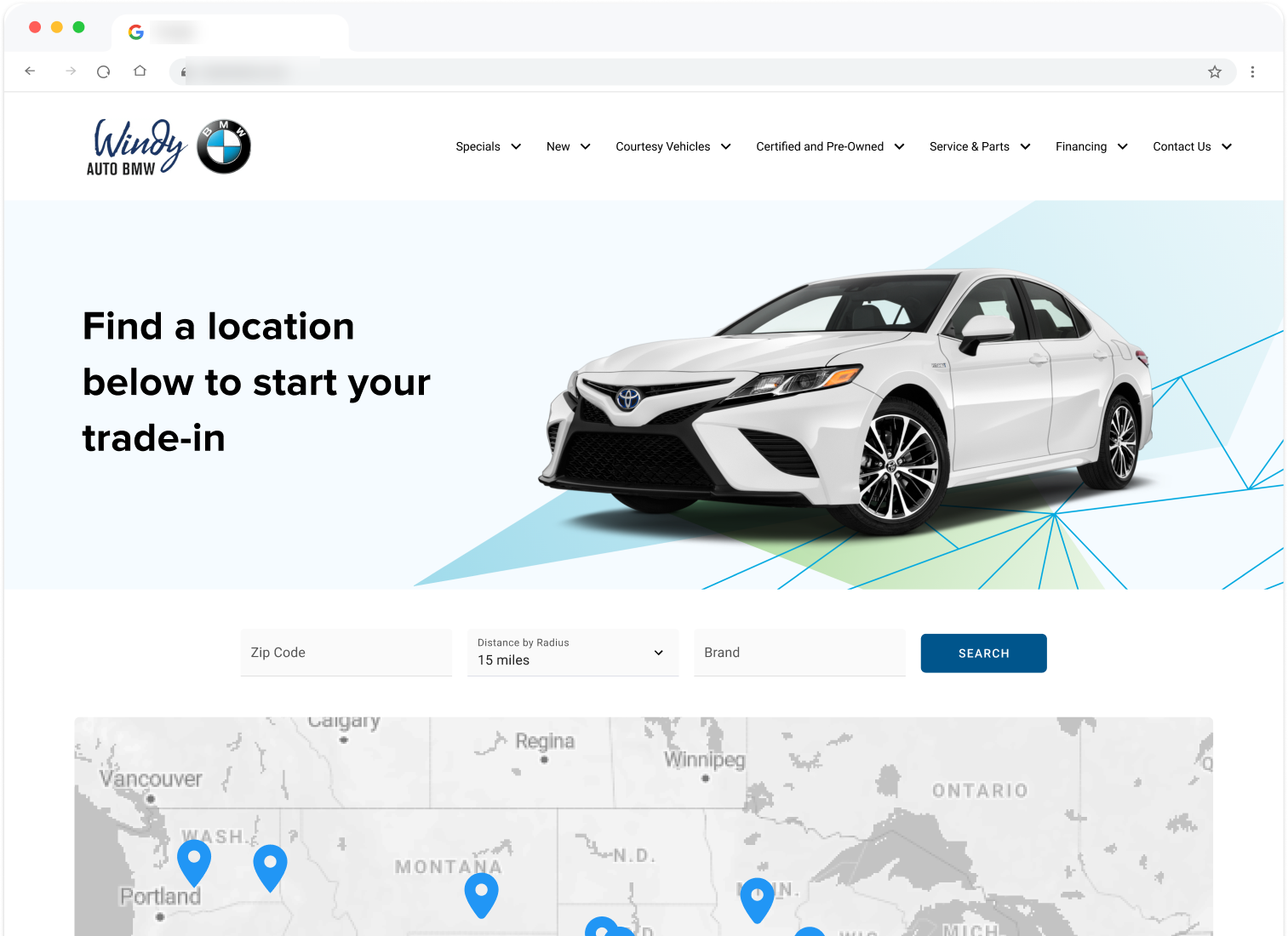
White-labeling also made ClearCar a platform for new ideas. When ACV wanted to test selling cars straight to its dealer network under a brand of its own, I built BidRev on this same flow, including the brand, messaging, and go-to-market: read the BidRev case study →
Behind all of it sat the ClearCar Admin Portal, where ACV’s team set up every dealer, store, and integration. I redesigned that too: read the Admin Portal case study →
2026
Designing in code
In 2026 I redesigned the ClearCar customer offer widget, and this time the design lived in code. I used a live Storybook prototype as the source of truth instead of static mockups, took part in engineering code review, and fixed real bugs before handoff: an animation timing issue, expiration dates that didn’t update, unsafe data handling, and empty values that could break the page. I documented every decision and tradeoff in a design journal so engineering could pick it up cleanly.
It’s the same principle as the rest of ClearCar: the offer has to be right. This time I made sure it stayed right all the way to production.
What changed
- For consumers: a real offer in about a minute, with the reasoning visible.
- For dealers: a steady stream of cars bought directly from consumers, priced on real condition data, with the tools to close the deal on the lot.
- For ACV: ClearCar became one of the pillars of ACV MAX, and the foundation for bringing ClearCar and MAX together into one platform, a project I also led.
What I took away
In lead generation, length isn’t the enemy. Uncertainty is. People will finish a long flow if they trust where it’s going and can see themselves getting closer.